

What is Box Jacking? Method, Technique, and Applications in Tunnel Construction
Considering the rate of urbanization and the development of new transport networks, the need for new underground infrastructure is greater than ever. New urban contexts demand, among other elements, railway crossings, metro underpasses, road tunnels, and utility corridors, all of which need to be built when there are existing roads, rail, and other structures in the area. Additionally, most traditional, open-cut excavation methods create severe traffic disruptions and extend construction durations, and are more expensive, directly impacting the environment.
Because of this, there is a great reliance on and need for trenchless methods. These methods allow for the construction of underground infrastructure while causing the least amount of disruption to the existing infrastructure.
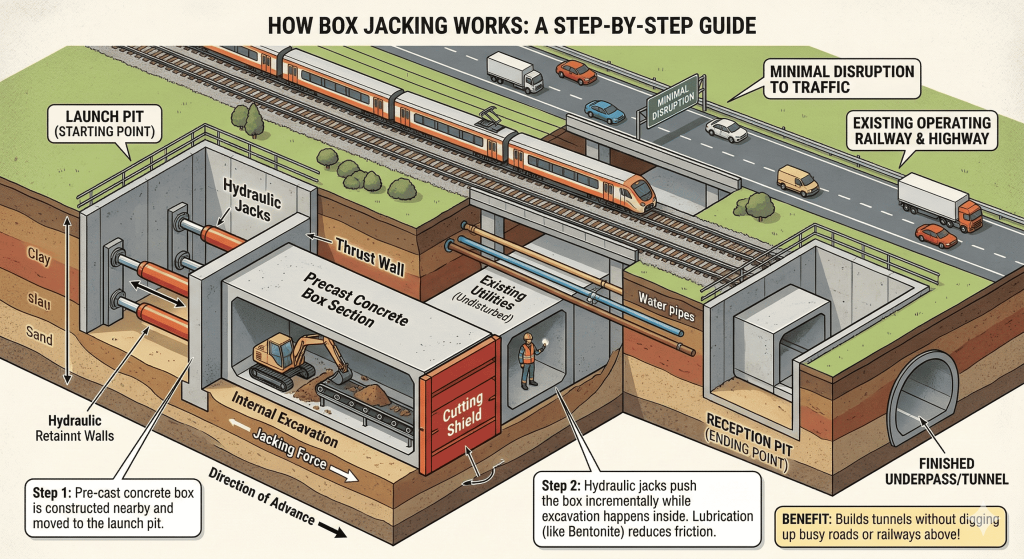
Within the range of trenchless construction methods, one of the most widely used and most dependable is known as box jacking. In this method, a large, precast reinforced concrete box is pushed through the ground using powerful hydraulic jacks. The box is fitted with its own excavation equipment, which allows the box to create a tunnel as it is pushed through the soil. As a result, it is possible to create tunnels that run under other roads, railways, and structures without causing any surface disruptions.
What is Box Jacking in Tunnel Construction?
Box jacking is a method of tunnel construction in which large precast boxes are installed under roads or railways without creating a trench.
Simply, in a box jacking tunnel, a box is pushed into the ground using hydraulic jacks. As the box moves, the soil is excavated from the box, allowing the box to move fully to the position required.
This method is popular in construction because it allows the passage to be built without the need to close the roads or railways. While construction occurs, railroads, roads, and subway systems will operate as usual.
Key reasons why box jacking is widely adopted include:
- Less disruption to vehicles and trains
- Construction is completed quicker
- Work in the tunnel is safer
- Excavation required is less
Because of these advantages, the box jacking tunnel method is commonly used in railway underpasses, road crossings, and metro infrastructure projects around the world.
Understanding the Jack Pushing Method
Box jacking utilizes the jack pushing method, a technique used by hydraulic jacks that are capable of producing a measured amount of force to move a jacking mechanism.
In the jack pushing method, a system of hydraulic jacks is used to move a box that is situated within a launching pit that is built to support the system. When the jacking mechanism is engaged, the box is pushed forward into the earth. Box jacks have an excavation system within them to remove dirt that is pushed forward into the box to alleviate the friction that the box encounters.
Box jacking is a controlled trenchless excavation method. There are several stages that each controlled process is divided into, the hydraulic jacks are cycled to retract or move to a different position within the box to allow the box to move to the final position/ alignment.
Three critical factors ensure the success of the jack pushing method:
- Pushing Force – Hydraulic jacks must provide sufficient force to overcome soil resistance.
- Alignment Control – Engineers monitor the direction and level of the box during the pushing process.
- Structural Stability – The box must withstand the stress generated during pushing.
Proper planning and precise hydraulic systems ensure that the jack pushing work progresses safely and efficiently.
Step-by-Step Box Jacking Method of Tunnel Construction
The box jacking method of tunnel construction involves a series of carefully planned engineering steps. Each stage ensures that the structure moves forward safely while maintaining the correct alignment.
1. Site Preparation and Excavation
The first step of the process is site preparation. Engineers develop a launching pit. This pit will be the starting point of the box jacking process. This pit can hold the precast concrete box and the hydraulic jacking mechanism.The launching pit must be constructed to handle the great pushing forces that will act on it.
2. Installation of Hydraulic Jacks
When the launching pit is completed hydraulic jacks are placed behind the concrete box unit. These jacks sit on what is called a reaction wall that will absorb the pushing force.The jacks are linked to hydraulic power units that provide the required pressure to advance the unit.
3. Box Pushing Process
The box pushing process will only begin when the hydraulic pressure is applied to the jacks. Each cycle of pushing increments the box forward. Once the jacks are retracted there is a reset of the mechanism to begin the next box shifting cycle.Each push cycle moves the box forward by a small distance. After the jacks retract, the system resets for the next pushing stage.
4. Soil Excavation and Alignment Control
During the pushing process, workers excavate soil from inside the box structure. Removing soil reduces resistance and allows the box to move forward smoothly.Engineers constantly monitor the alignment using advanced surveying instruments to ensure the tunnel remains on the correct path.
5. Completion of the Box Jacking Tunnel
The process continues until the structure reaches the receiving pit on the other side. Once the box jacking tunnel reaches its final position, finishing works such as structural reinforcement, waterproofing, and road or rail connections are completed.This systematic approach makes the box jacking method of tunnel construction highly reliable for infrastructure development.
Box Jacking Technique Used in Modern Infrastructure
The box jacking technique is widely used in modern civil engineering because it allows large underground structures to be installed with minimal surface disruption.
Several engineering principles govern this technique, including:
- Controlled hydraulic pushing force
- Soil stability management
- Precise alignment monitoring
- Structural integrity of the box section
Modern box jacking technique operations use advanced equipment such as hydraulic jacking systems, laser-guided alignment tools, and real-time monitoring systems.These technologies ensure that the structure moves smoothly and remains within design tolerances throughout the project.
Equipment Used in Box Jacking
A successful box jacking project relies on specialized equipment that ensures precise control during the pushing process.
Hydraulic Jacks
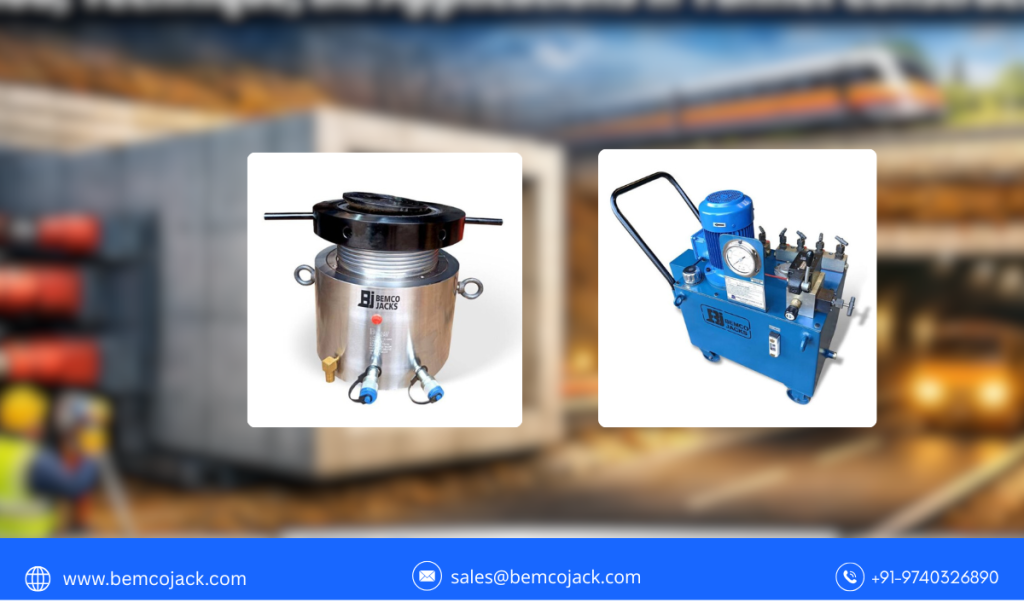
High-capacity hydraulic jacks generate the pushing force required to move the concrete box through soil. These jacks must be extremely reliable and capable of handling heavy loads.
Pumping Units
Hydraulic pumping units supply pressurized oil to the jacks, enabling them to extend and retract during each push cycle.
Guide Frames
Guide frames ensure that the box structure remains aligned with the tunnel path during pushing.
Cutting Edge Structures
The front end of the box structure is often fitted with a cutting edge to help penetrate soil more efficiently.
Monitoring Systems
Modern monitoring systems track alignment, pressure levels, and structural stress throughout the jacking process.
High-performance hydraulic systems such as industrial hydraulic jacks manufactured by Bemco Jacks play a critical role in ensuring that box jacking operations are safe, controlled, and efficient.
Advantages of the Box Jacking Method
The box jacking method offers several benefits that make it a preferred solution for tunnel construction projects.
Minimal Traffic Disruption
Since most work happens underground, road and rail traffic above can continue without interruption.
Reduced Excavation
Unlike open-cut methods, box jacking requires limited surface excavation.
Faster Construction
The technique allows engineers to complete tunnel installations more quickly.
Suitable for Urban Areas
Box jacking is ideal for densely populated areas where surface excavation is not feasible.
These advantages make the method extremely useful for modern infrastructure development.
Applications of Box Jacking in Infrastructure Projects
The box jacking tunnel method is widely used across many types of infrastructure projects.
Railway Underpasses
Box jacking allows tunnels to be constructed beneath active railway tracks without stopping train operations.
Road Tunnels
Urban roads often require underground crossings to improve traffic flow. Box jacking provides a safe and efficient solution.
Metro Rail Projects
Metro networks frequently use box jacking to build underground passages and service tunnels.
Utility Corridors
Infrastructure such as water pipelines, electrical systems, and communication lines can be installed through tunnels created using box jacking.
Because of its efficiency, the box jacking tunnel technique continues to gain popularity in transportation and urban development projects.
Challenges in Box Jacking Work and How Engineers Overcome Them
While jack pushing work is highly effective, it also presents several engineering challenges.
Soil Resistance
Different soil conditions can increase resistance during pushing. Engineers analyze soil properties beforehand to determine the required pushing force.
Alignment Issues
Even minor deviations can affect tunnel positioning. Advanced monitoring systems ensure precise alignment during the process.
Structural Stress
The concrete box structure must withstand significant forces. Engineers design reinforced structures capable of handling these loads.
With proper planning and reliable hydraulic systems, these challenges can be successfully managed.
Why Hydraulic Jacking Systems Are Critical in Box Pushing Projects
Hydraulic systems are the backbone of any box pushing operation.The success of a box jacking project depends heavily on controlled pushing force. Hydraulic jacks provide the power needed to move massive concrete structures while maintaining precise control.
Reliable hydraulic jacking systems ensure:
- Consistent pushing force
- Smooth movement of the box structure
- Reduced risk of structural damage
- Safe working conditions for operators
High-quality hydraulic equipment is therefore essential for efficient box pushing projects.
Future of Box Jacking in Tunnel Construction
The future of box jacking looks promising as cities continue to invest in underground infrastructure. According to global infrastructure reports, urban populations are expected to grow significantly over the next few decades, increasing the demand for efficient transportation and utility networks.
As a result, trenchless technologies like box jacking are becoming more widely adopted because they minimize environmental impact and reduce construction disruptions.
Advancements in hydraulic systems, monitoring technologies, and structural engineering are expected to further improve the efficiency and safety of the box jacking technique.
Conclusion
The box jacking method has become a vital solution for constructing tunnels and underpasses in modern infrastructure projects. By using powerful hydraulic systems to push precast concrete structures through soil, engineers can build underground passages without disturbing surface transportation systems.
From railway underpasses to metro tunnels, the box jacking tunnel technique offers a safe, efficient, and cost-effective approach to underground construction.
As infrastructure demands continue to grow, advanced hydraulic equipment will play a crucial role in ensuring the success of these projects. Reliable hydraulic jacking systems and industrial hydraulic jacks, such as those engineered by Bemco Jacks, help deliver the precision, strength, and durability required for complex box pushing operations in today’s infrastructure development.
Looking for high-performance hydraulic jacks for your infrastructure or tunneling projects? Contact Bemco Jacks today to explore reliable hydraulic solutions designed to deliver power, precision, and long-term performance for demanding engineering applications.