

Common Mistakes in the Selection of Hydraulic Jacks

Hydraulic jacks are incredibly useful tools. They make heavy lifting seem easy, whether in a car repair garage, a construction site, or even a manufacturing plant. However, many people often make mistakes while selecting the right hydraulic jack for their needs. These mistakes can lead to poor performance, safety issues, or even damage to equipment. Let’s look at some of the most common errors and how you can avoid them.
Why Choosing the Right Hydraulic Jack Matters?
Hydraulic jacks are powerful tools that make lifting heavy loads easy and efficient. However, the effectiveness of a hydraulic jack depends heavily on selecting the right one for the job. Using the wrong jack can lead to poor performance, safety hazards, and equipment damage. For instance, a jack with insufficient load capacity might buckle under pressure, while a jack without proper safety features can put workers at risk.
When you choose the right hydraulic jack, you not only ensure smooth operations but also save money by avoiding frequent repairs or replacements. The right choice also improves productivity and guarantees safety during use, making it a critical decision for any project.
Now, let’s look at some common hydraulic Jack selection mistakes people make while selecting—and hydraulic jack selection tips using products from the best hydraulic jacks manufacturers in India.
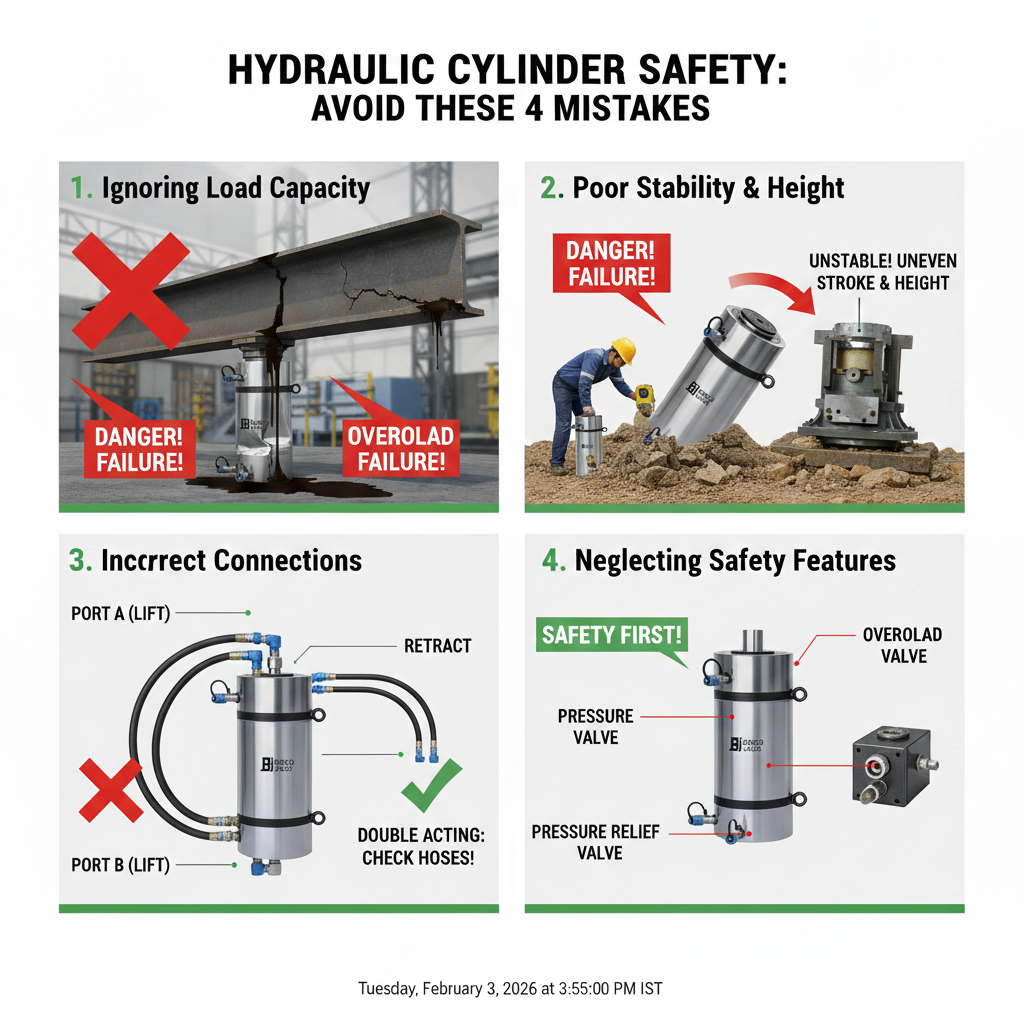
1. Ignoring Load Capacity
It is dangerous and one of the most common-to overlook the load capacity when buying a hydraulic jack. Each jack is rated to lift a target maximum weight. However, rated capacity and safe working load (SWL) are two terms many overlook.
Rated capacity is a measure of the maximum load the jack can lift under ideal conditions. In contrast, SWL is a measure of the load the jack can lift consistently and safely during normal operations. When rated capacity is relied upon under real-world conditions, the likelihood of failure multiplies.
A safety margin of 20 to 30 % must be maintained above the actual load to ensure safety and long-term performance. If a load is 10 tons, the jack you should use can lift 12-13 tons. This accounts for uneven load distribution, surface conditions, operational wear, stress, and more.
There are serious consequences of using an under-rated hydraulic jack which are listed below:
- A seal failure which can cause leaks of hydraulic oils and a loss of pressure
- Structural deformation which compromises the lifespan and stability of the jack
- A sudden drop of the load which can be dangerous to people and equipment in the vicinity.
When selecting hydraulic jacks for heavy lifting, it is important to consider the load weight and safety margins, and hydraulic jack manufacturers in India provide these details on their product description pages, making it easier for customers to understand rated capacities, SWL, and other technical specifications.
Safety Note: When choosing a hydraulic jack, always assess the actual weight of the load, add a safety buffer, and select a jack that exceeds your lifting requirements. This improves operational safety and enhances efficiency, reliability, and the lifespan of your equipment.
2. Not Considering the Lifting Height
Despite having a set maximum lift height, many users choosing hydraulic jacks often ignore this metric. This causes problems, especially in tire changing (heavy vehicles), lifting (industrial equipment) and supporting (large structures) as these applications require more height.
However, in practical use, height is not the only metric to consider. In almost all cases, loads are unevenly distributed. This applies to even smaller, off-centered loads as the unevenness creates significant stress on the hydraulic jack despite it being within the stated limits. With these shapes, the center of gravity becomes uneven and creates instability, reduces lifting efficiency, and increases the risk of tipping or mechanical failure.
Relying on a single hydraulic jack system creates the risk of inadequate lifting. It is better to have several jacks to avoid this. In controlled load movement and balanced lifting, the stress on individual jacks is minimized and the overall safety is better.
Engineering Insight: Before selecting a hydraulic jack, always measure the required lifting height and compare it carefully with the jack’s minimum height, maximum lift, and extension range. For complex or high-risk lifting operations, consulting the hydraulic jack manufacturer is strongly advised.
3. Overlooking the Jack Type
There are many different types of hydraulic jacks: bottle jacks, floor jacks, scissor jacks, and trolley jacks, each designed for different lifting purposes. Even if a jack’s load capacity seems fine, choosing an inadequate type results in operational restrictions. It’s also important to understand how a jack functions instead of just looking at the numbers.
Three important jack measurements should be taken into consideration:
Retracted Height: The fully lowered height, which should be less than the height of the load.
Extended Height: The fully raised height of the jack.
Stroke Length: The height difference between the retracted and extended heights, this measurement determines how high the jack can lift.
Clearance is especially important for low-profile jacks used in vehicle maintenance, machinery servicing, and equipment lifting. One of the most common mistakes is choosing a jack that can fit under the load, but is unable to provide the height needed in order to complete the lift. This may lead to incomplete lifting, workarounds, or even the need to change equipment during the process.
Prior to completing a hydraulic jack, always inspect:
- Initial clearance between the ground and the load
- Required final lifting height to safely perform the operation
- Whether spacers or cribbing will be needed to achieve the desired lift safely
Engineering Insight: Matching the jack type to the application—while carefully reviewing lift geometry—ensures smoother operation, better safety, and reduced risk of equipment misuse. Consulting detailed specifications provided by reliable hydraulic jack manufacturers can help eliminate these costly selection errors.
4. Choosing Price Over Quality
It’s natural to want to reduce upfront costs by choosing the cheapest hydraulic jack available. However, focusing solely on price is a common mistake that often leads to compromised performance, safety concerns, and higher expenses over time. Low-cost hydraulic jacks typically cut corners in critical areas that directly impact reliability and durability.
Many inexpensive jacks lack:
- Properly heat-treated components, which are essential for strength and long-term load-bearing performance
- Overload protection mechanisms, increasing the risk of sudden failure under stress
- Reliable sealing systems, leading to oil leakage, pressure loss, and inconsistent lifting
While a low-cost jack may seem economical initially, the long-term cost tells a different story. Cheaper jacks often require frequent repairs, have a shorter service life, and pose a higher safety risk to operators and surrounding equipment. Unexpected failures can also result in downtime, project delays, and costly replacements.
Investing in a high-quality hydraulic jack from trusted hydraulic jack manufacturers in India ensures better engineering, consistent performance, and compliance with safety standards. Quality jacks are designed to withstand demanding working conditions and deliver dependable results over extended periods.
Expert Perspective: When selecting hydraulic equipment, it’s important to prioritize value over price. A well-built hydraulic jack may cost more upfront, but it delivers greater reliability, enhanced safety, and a lower total cost of ownership—making it a smarter long-term investment.
Ignoring Safety Features
Safety should always be a top priority when working with hydraulic equipment, yet it is often overlooked during jack selection. Many hydraulic jacks are equipped with critical safety features such as overload protection, pressure control mechanisms, and stability enhancements. However, some users opt for simpler, low-cost options that lack these safeguards—significantly increasing the risk of accidents, injuries, and equipment damage.
Skipping essential safety features can expose operators to sudden load drops, uncontrolled pressure buildup, or jack instability, especially in high-risk environments like construction sites, workshops, and industrial plants.
Essential Safety Features to Look For in a Hydraulic Jack
When selecting a hydraulic jack, ensure it includes the following safety features:
- Overload Protection Valve
Prevents the jack from lifting loads beyond its safe capacity. This protects internal components from excessive stress and reduces the risk of sudden mechanical failure. - Pressure Relief Valve
Automatically releases excess hydraulic pressure, preventing seal damage, oil leaks, and uncontrolled lifting under extreme conditions. - Lock Nut or Load-Holding Valve
Helps maintain the lifted load securely in position, even if hydraulic pressure drops. This feature is especially critical during extended lifting or maintenance operations. - Wide and Stable Base
Enhances overall stability and reduces the chances of tipping, particularly when lifting heavy or uneven loads on challenging surfaces. - Clear Capacity Markings
Allows operators to quickly verify load limits, minimizing the risk of accidental overloading due to misjudgment or lack of information.
Each of these features plays a vital role in protecting both the operator and the equipment, ensuring controlled lifting, stable load support, and safer working conditions. Choosing a hydraulic jack with built-in safety mechanisms is not optional—it is essential for preventing accidents and ensuring compliance with best safety practices.
Best Practice: Always select hydraulic jacks from reputable manufacturers that prioritize safety engineering and clearly document these features in their product specifications.
How to Choose the Right Hydraulic Jack – Quick Buyer Checklist
Selecting the right hydraulic jack is not just about lifting capacity—it’s about safety, reliability, and long-term performance. Before making a purchase, use this quick checklist to ensure you choose a solution that meets your operational needs and industry standards.
✔ Load Capacity with Safety Margin
Always select a hydraulic jack with a capacity at least 20–30% higher than the actual load to account for uneven distribution, operational stress, and safety compliance.
✔ Correct Jack Type for the Application
Choose the right jack type—bottle, floor, trolley, or scissor—based on how and where the load will be lifted. The right design ensures stability and efficient operation.
✔ Required Lifting Height and Clearance
Verify the jack’s collapsed height, stroke length, and maximum lifting height to ensure it fits under the load and raises it to the required working height.
✔ Suitability for the Working Environment
Consider factors such as surface conditions, space constraints, frequency of use, and exposure to dust, moisture, or extreme loads when selecting your hydraulic jack.
✔ Certified Safety Features
Ensure the jack is equipped with essential safety features like overload protection, pressure relief valves, load-holding mechanisms, and clear capacity markings.
✔ Service Support and Spare Availability
Reliable after-sales service and easy access to genuine spare parts are critical for minimizing downtime and extending equipment life.
With decades of engineering expertise and a commitment to international quality standards, BEMCO JACKS delivers durable, safe, and application-specific hydraulic solutions. From standard lifting requirements to custom-built systems, our products are designed to perform reliably across industries such as construction, railways, defense, and heavy engineering.
Conclusion
Selecting the right hydraulic jack is critical for safety, efficiency, and long-term performance. By avoiding common mistakes—like neglecting load capacity, overlooking safety features, or choosing the wrong type—you can ensure smooth operations and prevent costly mishaps. Always prioritize quality, durability, and suitability for your specific tasks. Contact us today to find the perfect solution for your hydraulic requirements.
When it comes to hydraulic equipment, trust matters. BEMCO JACKS, based in Belgaum, Karnataka, is India’s trusted name in high-quality hydraulic solutions. With a strong commitment to international engineering standards, we deliver reliable, safe, and advanced products tailored for industries like construction, railways, defense, and heavy engineering.