

Guide to High Pressure Industrial Hydraulic Jacks: Selection, Maintenance, and Best Practices
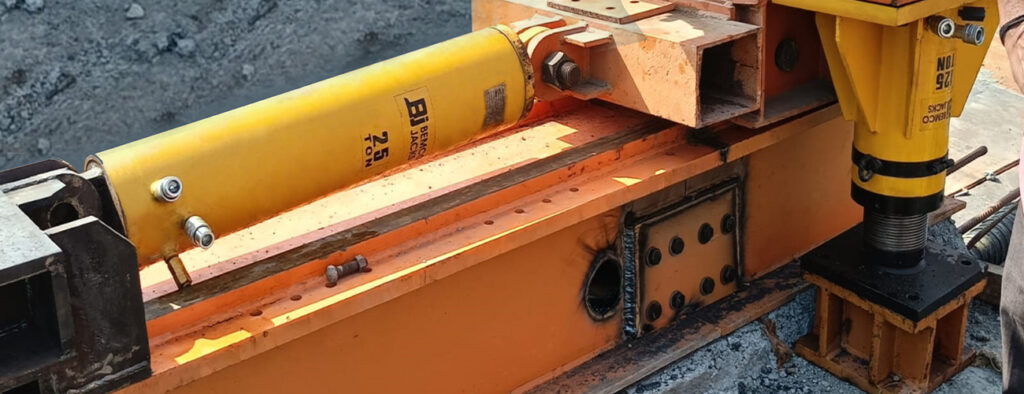
Hydraulic jacks are the backbone of many industries and probably one of the most used and powerful lifting equipment. Used everywhere from Construction Sites, Railway Workshops, and Heavy Engineering sectors. In case you are looking to use the power of hydraulic jacks in your operations, this guide will help and prepare you with information for selecting, maintaining of the Hydraulic jacks, and safe operations.
Selecting the Right Hydraulic Jack
The first thing that has to be done in the process of effective lifting, is the selection of the correct Hydraulic jack. Here are some key factors to consider:
- Load Capacity: The Capacity of the Jack should be suitably chosen based on Axial and Radial Forces that are going to act on it. Just like any other tool, hydraulic jacks can only lift within a rated limit, and exceeding this makes it extremely dangerous and might damage the jack and even lead to an accident. When in doubt, opting for a jack with a higher capacity than your immediate need provides a safety buffer and future flexibility. As a thumb rule, Jacks should be used to a maximum of 80% of the Safe Working Load for safety of the Lifting Process and Longer Life of the Jacks.
- Stroke / Lift Height: Consider the vertical space in which the Jack will be placed. The minimum and maximum lifting points of the jack should be suitable for all your anticipated lifting scenarios. For example, one might require a low-profile jack for use in areas where clearance is lower. At ‘BEMCO JACKS’ we also make customized solutions that are designed as per space constraints during operation. For Stroke as well, 80% of rated stroke of the jack should not be exceeded for Safety and Longevity of the Jacks.
- Jack Type: The Type of Jacks must be chosen carefully as per Loading Scenarios. Jacks are available in the following types as per Application:
- Single-Acting – Jacks are Lifted Hydraulically, but retraction of the Jack is by Gravity / Self-Weight of the Plunger.
- Double-Acting – Jacks are Lifted and Retracted Hydraulically. Suitable Load Holding Blocks and Counter Balancing can be added, for Hydraulic Locking of the Jacks during Lifting and for Controlled Lowering.
- Plain Ram – The Piston Rod is Plain. This provides higher stability to the lifting of the jacks, due to two-point guiding. The Jacks can be Hydraulically Locked by adding Load Holding Valves. However, Mechanical Locking cannot be provided. Hence, these type of Jacks should be ideally used for Pushing/Pulling applications. Controlled Lowering is required, or applications where Mechanical load holding is not required. These type of Jacks also provide a Higher Side Loading / Radial Load Capacity.
- Threaded Ram with Safety Locknut – The Piston Rod is threaded and a Lock nut is provided for Mechanical Load Holding. It is an ideal choice for applications where the load needs to be locked for longer durations.
- Hollow Ram – The Piston Rod in these type of Jacks are Hollow. They are used in applications requiring a Bar/Shaft to be passed through the Jack. These Jacks are ideal for applications such as Bearing & Bush Removal, Bar Stressing, Lifting using HT Bars.
- Multi & Mono Strand Stressing Jacks – These Jacks are specially designed and used for Pre-Stressing of HT Strands. They are available with Mechanical and Hydraulic Wedge Lock arrangements and Kits to suit various combinations of HT Strands.
- Aluminum Hydraulic Jacks – These jacks are made in Aluminum, hence drastically reducing the weight of the Hydraulic Jacks. Suited for applications where the jacks need to be handled by manual effort.
- Single-Acting – Jacks are Lifted Hydraulically, but retraction of the Jack is by Gravity / Self-Weight of the Plunger.
Additional Attachments with Industrial Hydraulic Jacks:
- Tilting Saddle: These are used to allow a 5 degree tilt in axial load. Ideal for applications involving lifting/lowering applications on a gradient.
- Base Plate: For Jacks with Higher Strokes, base plates are required to stabilize the Jack. Also used for Mounting the Jacks in Horizontal or Upside-Down Conditions.
- Collar Threads and Flanges: These are required when Jacks are used as High Pressure Cylinders for various applications.
- Load Holding Valves: Used to Hydraulically Lock the Piston or for Controlled Lowering.
These are the various parameters for choosing the right type of jack for your application. At BEMCO JACKS, we have various models with various combinations of the above features.
Maintaining Your Hydraulic Jack for Optimal Performance
Just like any other piece of equipment, proper maintenance is essential for ensuring the longevity and safe operation of your hydraulic jack. Here are some key maintenance tips:
- Regular Inspections: Examine your jack regularly before each use for any indications of mechanical damage/corrosion. Inspect hoses, the ram and pressure relief valve. Operate the Jacks in Idle Condition to check for Leakages/Seal Damage. Seals should be replaced once every 12 months.
- Hydraulic Oil: Hydraulic Oil used should be as per OEM Manual.
- Cleaning: Keep your jack clean and free of dirt and debris. This helps prevent contamination of the hydraulic fluid and protects the jack’s seals and moving parts..
- Storage: When not in use, store your hydraulic jack in a clean, dry place, preferably out of direct sunlight. Release any pressure before storing.
Best Practices for Safe Lifting with Hydraulic Jacks
Safety should always be the top priority when using hydraulic jacks. Here are some essential best practices to follow:
- Read the Manual: Before operating any hydraulic jack, thoroughly read and understand the manufacturer’s instructions. This will familiarize you with the jack’s specific features and safe operating procedures.
- Exceeding Capacity: Never exceed the rated lifting capacity of your hydraulic jack. Doing so can lead to equipment failure and serious injury.
- Stable Base: Ensure the jack is placed on a level, stable surface that can support the weight of the load. Avoid soft or uneven ground, as this can compromise the jack’s stability.
Conclusion
Hydraulic jacks are indispensable tools across various industries due to their power, versatility, and reliability. By understanding the different types of hydraulic jacks, implementing proper maintenance practices, and adhering to safety guidelines, you can maximize the efficiency and longevity of your equipment.
We offer a comprehensive range of hydraulic jacks to cater to your specific lifting needs. We build our products with quality and durability in mind, ensuring they perform reliably even in the most demanding conditions.
Ready to invest in industrial hydraulic jacks that deliver exceptional performance? Explore the BEMCO JACKS range of high-quality hydraulic jacks and hydraulic powerpacks today and experience the difference. Visit our website to browse our product range and find the perfect jack for your application.
Our team of experts is also available to provide guidance and support in selecting the right hydraulic jack for your specific requirements. Contact us today to discuss your needs and discover how BEMCO JACKS can help you achieve your lifting goals safely and efficiently.